
Confident Coaching: How CatalyX PSE™ Makes Pricing Your Worth Effortless
- Mark Mathia

- Dec 4, 2025
- 6 min read
You've been there. Staring at your computer screen at 11 PM, crafting yet another proposal, and that familiar knot forms in your stomach when you get to the investment section.
Is this too much? Will they think I'm greedy? Maybe I should just lower it by $500...
Sound familiar?
Here's what I've learned after working with hundreds of coaches: The ones who struggle most with pricing are often the ones who give the most. They pour everything into their clients, stay late on calls, answer texts on weekends, and somehow still wonder if they're "worth" what they're charging.
This has to stop.
Not because you should care less about your clients: but because undervaluing yourself ultimately serves no one. When you're stressed about money, resentful about boundaries, or burning out from overgiving, your ability to create real transformation diminishes.
The coaches who change lives AND build sustainable businesses understand something crucial: Service and smart pricing aren't opposites: they're partners.
Let me show you how the CatalyX PSE™ framework can transform your relationship with pricing from anxious to effortless.
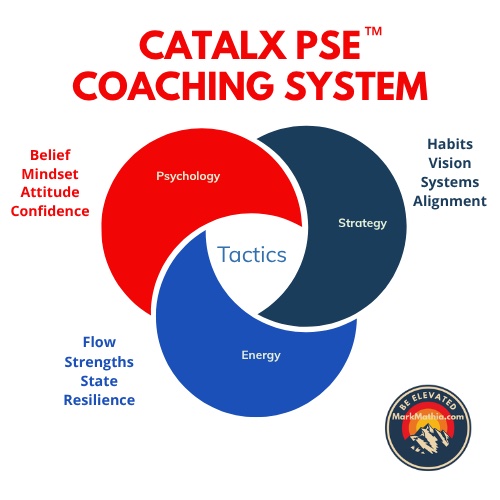
Psychology: Rewiring Your Money Mindset
Most pricing anxiety isn't really about pricing: it's about psychology. Specifically, the stories you tell yourself about money, worthiness, and what it means to be "helpful."
The Helper's Dilemma
Many coaches enter this profession because they genuinely want to help people. There's nothing wrong with that drive: except when it gets tangled up with beliefs like:
"Good people don't focus on money"
"If I charge what I'm worth, I'm being selfish"
"Real transformation should be accessible to everyone"
These beliefs sound noble, but they create a dangerous pattern: You undercharge, overdeliver, and slowly drain your reserves. Eventually, you either burn out or build resentment toward the very clients you set out to serve.
The Strengths-Based Pricing Reset
Here's where your unique strengths become your pricing foundation. When you understand your natural talents: through tools like CliftonStrengths: you stop competing on price and start charging for transformation.
Let's say your top strength is Strategic. You don't just coach people; you help them see around corners, anticipate obstacles, and build sustainable pathways to success. That's not a $75/hour conversation: that's a strategic partnership that saves clients years of trial and error.
Or maybe you lead with Empathy. You don't just listen; you create a safe container where people can finally be honest about their deepest fears and biggest dreams. That emotional breakthrough isn't just coaching: it's healing that ripples through every area of their life.
Psychology Exercise: The Value Audit
Take 15 minutes and write down:
Your top 3 CliftonStrengths (or natural talents)
Three specific client transformations you've facilitated
What those changes were worth to your clients (in dollars, time saved, or life impact)
Most coaches discover they've been charging for their time when they should be charging for their unique transformation capability.

Strategy: Creating Offers That Command Premium Pricing
Once your psychology is aligned, strategy becomes straightforward. The key isn't to justify high prices: it's to create offers so valuable that your pricing feels like a natural fit.
The Big Problem Principle
Here's the truth about premium pricing: People don't pay high fees for small problems. They invest significant money when they're facing significant challenges that require specialized expertise.
Instead of positioning yourself as "a life coach" or "a business coach," identify the specific, expensive problems you solve:
"I help overwhelmed executives reclaim 20+ hours per week while increasing their team's performance"
"I guide entrepreneurs through their first million-dollar year without sacrificing their marriage"
"I transform burned-out healthcare leaders into energized visionaries who love their work again"
Notice the difference? These aren't vague improvements: they're specific outcomes that have measurable value.
The Three-Tier Strategy Framework
Create pricing that reflects the different levels of transformation you provide:
Tier 1: Problem-Solving (Good) Tactical coaching that addresses immediate challenges. Think workshop-style sessions or group programs. Price based on the specific problem you're solving.
Tier 2: System-Building (Better) Strategic coaching that builds long-term capabilities. Individual coaching relationships focused on creating sustainable change. Price based on the systems and skills you're installing.
Tier 3: Transformation (Best) Deep partnership that creates fundamental shifts in how someone operates in the world. Extended engagements with multiple touchpoints. Price based on the complete transformation you're facilitating.
Most coaches get stuck offering only Tier 1 solutions and then wonder why their pricing feels constrained.
Strategy Exercise: The 90-Day ROI Calculator
For your next potential client, calculate:
What staying stuck costs them (in dollars, opportunities, stress)
What solving this problem is worth (specific outcomes, not feelings)
What your role in that transformation is worth (10-50% of the value created is standard)
This isn't about being greedy: it's about being honest about value creation.
Energy: Building Sustainable Practices That Eliminate Pricing Anxiety
The final piece of confident pricing is energy management. When you're running on fumes, every financial decision feels urgent and every client conversation feels loaded with desperation.
The Margin Principle
Sustainable coaching businesses operate on margins: profit margins, time margins, and energy margins. This means:
Profit margins: Your business generates enough revenue that you're not stressed about the next client
Time margins: Your schedule has space for strategic thinking, not just client delivery
Energy margins: You end most days feeling energized, not depleted
When you have margins, pricing becomes strategic rather than survival-based.
The Boundary-Revenue Connection
Here's what most coaches miss: Clear boundaries actually increase revenue. When you're available 24/7, respond to texts immediately, and extend sessions regularly, you train clients to expect unlimited access for limited investment.
Instead, create container that makes your time more valuable:
Communication boundaries: "I respond to client communications within 24 hours on business days" Session boundaries: "Our sessions are 50 minutes to allow processing time and preparation for my next client" Scope boundaries: "Additional requests outside our agreed focus areas can be addressed through extended engagements"
These aren't restrictions: they're professional standards that signal your expertise is valuable.
Energy Exercise: The Professional Standards Audit
List your current client practices in three categories:
Green Energy: Practices that energize you and create clear value
Yellow Energy: Practices that are neutral but necessary
Red Energy: Practices that drain you and muddy your value proposition
Eliminate the red, systematize the yellow, and build your pricing around the green.

The Integration: Your Confident Pricing Protocol
When Psychology, Strategy, and Energy align, pricing anxiety transforms into pricing confidence. Here's your implementation protocol:
Week 1: Psychology Reset
Complete the Value Audit exercise
Identify and challenge your money mindset blockers
Write a one-paragraph description of your unique transformation capability
Week 2: Strategy Development
Define the specific, expensive problem you solve best
Create three-tier pricing that reflects different levels of value
Calculate the ROI for your signature program or service
Week 3: Energy Optimization
Complete the Professional Standards Audit
Implement three specific boundaries that protect your energy
Design client containers that make your time more valuable
Week 4: Implementation and Testing
Present your new pricing structure to one prospective client
Notice what comes up (resistance, confidence, etc.)
Refine based on the actual conversation, not imagined objections
The Truth About Serving and Pricing
Here's the reality most coaches need to hear: Undercharging doesn't make you more helpful: it makes you less sustainable.
When you price your services appropriately:
You can invest in better training and tools
You attract clients who value transformation over convenience
You model healthy boundaries and self-worth
You build a business that can serve people for decades, not just years
The coaches who create the most lasting impact aren't the ones who charge the least: they're the ones who charge appropriately and deliver exceptional results.
Your expertise, your time, and your transformation capabilities have real value. Not just to you, but to the people whose lives you're changing.
Stop apologizing for that value. Start claiming it.

Your Next Move
Pick one element from this framework and implement it this week:
Psychology: Complete the Value Audit and identify one money mindset belief that's keeping you stuck
Strategy: Define the specific, expensive problem you solve and calculate what that's worth to your ideal client
Energy: Implement one professional boundary that protects your time and increases your value
Then come back and tell us what shifted. Because here's what I know about confident coaches: They don't just change their own relationship with money: they give everyone around them permission to value themselves appropriately too.
Ready to dive deeper into building a coaching business that serves at the highest level while generating the income you deserve?Visit our coaching resources to explore how the CatalyX PSE™ framework can transform not just your pricing, but your entire approach to sustainable success.
What's your biggest pricing challenge right now? Drop it in the comments( let's solve this together.)
Comments